
- Austin’s NOAA Weather Radio transmitter is WXK27 on 162.400 MHz.
- Just 12 inches of rushing water can carry away most cars, says the National Weather Service.
- Turn Around, Don’t Drown.
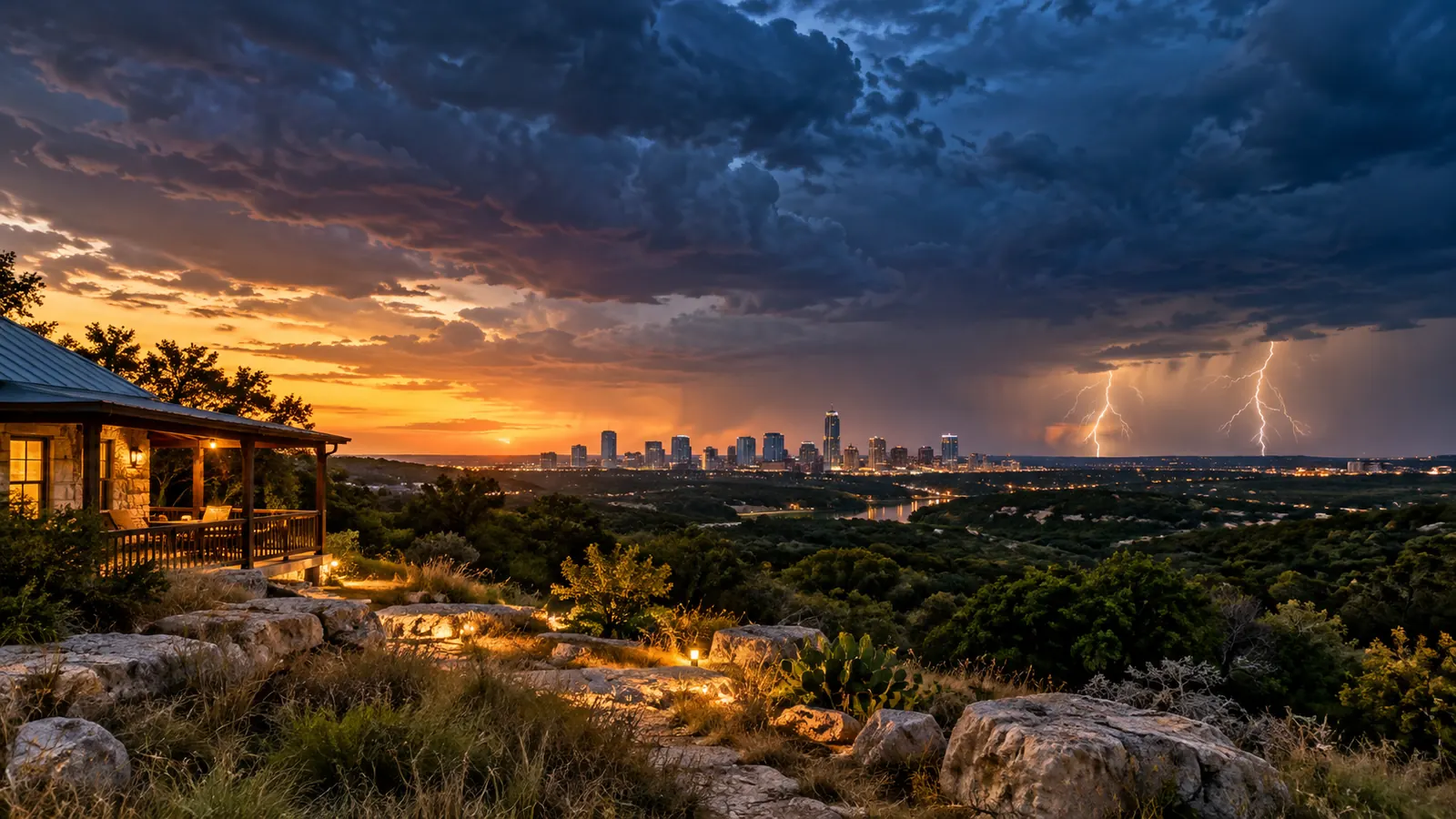
Central Texas weather is mostly sunshine and heat, punctuated by storms that arrive fast and drop a lot of rain on hilly ground. That combination makes flash flooding the hazard locals talk about most. Good information is free; the challenge is having it when the power or the phone signal fails.
Where official warnings come from
Weather watches and warnings for Austin are issued by the National Weather Service office that serves Austin and San Antonio. TV and radio meteorologists explain and map them, often in great detail, but the warnings themselves come from the Weather Service. KXAN, for example, brands its forecasts as First Warning weather, and FOX 7 offers a weather app it calls the FOX 7 WAPP.
NOAA Weather Radio: WXK27
| Transmitter | Call sign | Frequency | Counties served |
|---|---|---|---|
| Austin | WXK27 | 162.400 MHz | Bastrop, Blanco, Burnet, Caldwell, Hays, Lee, Travis, Williamson |
| San Antonio | WXK67 | 162.550 MHz | San Antonio area |
NOAA’s own transmitter data lists WXK27 in Austin on 162.400 MHz, operated by the Austin/San Antonio office, with normal status at the time we checked. NOAA Weather Radio broadcasts warnings, watches and forecasts 24 hours a day and carries other emergency information through the Emergency Alert System. It uses VHF frequencies between 162.400 and 162.550 MHz, so you need a weather radio or scanner; an ordinary FM radio will not pick it up.
Tip: Set up a weather radio for your own county the day you buy it. In a storm at 3 a.m. you want it to wake you, and you will not want to read the manual then.
Flash floods: the numbers to remember
The National Weather Service’s Turn Around Don’t Drown campaign exists because people underestimate moving water. Its figures are worth memorizing:
- Over half of all flood-related drownings occur when a vehicle is driven into hazardous flood water, according to the CDC figures the Weather Service cites.
- Six inches of fast-moving flood water can knock over an adult.
- Twelve inches of rushing water can carry away most cars.
- Two feet of rushing water can carry away SUVs and trucks.
- The road itself may have collapsed under the water.
The Weather Service’s conclusion is blunt: it is never safe to drive or walk into flood waters. Low-water crossings, common on Hill Country roads, are exactly where this matters. Some have warning signs that say When Flooded, Turn Around Don’t Drown, a sign design the Weather Service notes meets federal highway standards.
Before storm season
- Know whether your commute crosses low-water crossings and plan an alternative route.
- Install at least one station weather app and keep phone emergency alerts on.
- Put fresh batteries in a radio and know your AM or FM news stations.
- If you rely on an outdoor antenna, check its mount after hail and wind storms; see The Best TV Antenna for Austin and the Hill Country.
During a storm
Follow warnings, not just forecasts, and do not drive through water you cannot see the bottom of. If the power goes out, streams stop, but a battery radio and a weather radio keep working. KUT 90.5 and the commercial news stations on the dial carry local updates; see Austin Radio Stations by Frequency: The FM and AM Dial.
Heat is a hazard too
Austin’s long, hot summers bring their own warnings. When the Weather Service issues heat advisories, local stations carry them alongside storm coverage. Treat them seriously, especially for older relatives and outdoor workers, and check on neighbors without air conditioning.
How warnings reach you
Warnings travel through three systems at once: the Emergency Alert System on TV and radio, Wireless Emergency Alerts on phones and NOAA Weather Radio. Emergency Alerts in Austin: How Warnings Reach Your TV, Radio and Phone explains each one.
Watches versus warnings
A watch means conditions are favorable for a hazard such as a flash flood or severe thunderstorm; a warning means it is happening or about to. During a flash flood watch, plan routes that avoid low-water crossings. During a warning, act: stay off flooded roads and move to higher ground if you are told to.
Using the TV weather teams well
Local meteorologists add what an official warning cannot: street-level timing, radar loops and context about where the heaviest rain is falling. Keep one station’s app with alerts on, and when a warning is issued, check its live coverage for the details of your neighborhood. FOX 7’s WAPP and KXAN’s First Warning coverage are two examples of station weather services.
If anyone in your home depends on powered medical equipment, plan for outages before storm season. Know how you will get information without power, which neighbors can help and where you would go if you had to leave. A battery radio and a charged phone are the minimum.